Mostrando entradas con la etiqueta Puck. Mostrar todas las entradas

jueves, 9 de octubre de 2014

The Illusion of Love in MND

In his comedies, Shakespeare examines love, and all the various ways that it manifests itself in the human experience.  In A Midsummer Night's Dream, he uses another thematic proposition, illusion versus reality, to help him investigate the question of human love and how and/or why we fall in and out of love.

I think the main device in this play, concerning love as illusion versus reality, is the love juice provided by Oberon.  His interest to punish Titania by using it to make her believe that she is in love with a "wild thing," and also to assist the broken-hearted Helena in winning the love of Demetrius.  The fickleness and the unexplained origin of a human's "falling in love" are demonstrated onstage through the power that Oberon (and Puck) wields in this regard through the juice of a flower.

Of course, since Midsummer is a comedy, there are complications and mix-ups that must ensue, so Puck not only causes a "wild thing" (Bottom, as Puck has transformed him into an ass) to fall in love with Titania and Demetrius to fall in love with Helena, he also mistakenly causes Lysander to fall in love with Helena, creating the great comic "fight scene" in the woods between the four lovers. This demostrates how easy is it to manipulate love and affectons for the Fairy King.


Illusion versus reality is also demonstrated through the references made throughout the play that remind the audience that they are participating in the theatrical world "of illusion" --a world of fairies and magic in which whatever the playwright desires can happen and any mix-ups or troubles that the characters find themselves in, can be made right in an instant. At the play's end, Puck himself alludes to this contrast between illusion (theatre) and reality (the real world) with his lines:

If we shadows have offended

Think but this, and all is mended--

That you have but slumbered here

While this visions did appear.

And this weak and idle theme,

No more yielding than a dream.


Let me know what you think :)

REFERENCES:

Richter, N (2010) A Midsummer Night's Dream: Imagination, Romantic Love, and the Creation of Art Retrieved from http://www.studentpulse.com/articles/130/a-midsummer-nights-dream-imagination-romantic-love-and-the-creation-of-art

Shakespeare, W. A Midsummer Night's Dream  

miércoles, 8 de octubre de 2014

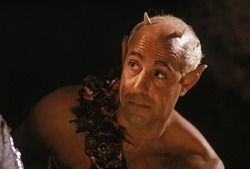
Puck: Heart and soul of the Midsummer Madness

After reading Shakespeare’s A Midsummer’s Night Dream, one of the characters that immediately caught my attention was Puck (also known as Robin Goodfellow), basically because he, a mischievous sprite and Oberon’s servant, is one of the most enjoyable and influential characters of this play.

In Elizabethan Folklore, Puck is a household fairy who likes to play annoying tricks on people, or, depending on his mood, helps them out with their chores (Shmoop Editorial Team, 2008).

Both, the original and the mythological one are known for being mischievous. However, in a Midsummer's Night Dream he is way more than a simple jester fairy. Puck is not as ethereal as the other fairies in the play (who seem to live only for themselves in a constant illusion). He is susceptible to misadventure and more similar to a goblin than to a fairy.  Actually, one of the fairies describes Puck as a “hobgoblin” in Act 2, Scene 1.

As his “hobgoblin” reputation suggests, Puck is fun-loving and thanks to this mischievous nature, he sets in motion many of the play’s most memorable events, becoming a really influential character in terms of the plot development and outcomes of the play.

Puck can be considered the soul of the play because he is the responsible of the Midsummer madness. He turns the young lovers’ world upside down, sending them into chaos; but he is also the one that helps restore the order and set things as they were supposed to be (Hermia and Lysander, and Helena and Demetrius together in love). And, for this same reason, he is the only character we can trust because he is the only one with the credibility to tell us that he knows everything in the play is a dream. He even promises that, if we did not like the play, he can help us think it was all a dream:

“If we shadows have offended,
Think but this, and all is mended:
That you have slumbered here
While these visions did appear;
And this weak and idle theme,
No more yielding but a dream,
Gentles, do not reprehend;
If you pardon, we will mend.”
(Shakespeare’s A Midsummer’s Night Dream, Act 5, Scene 1)

So, what do you think? How can a secondary character, that is not present in most of the play, be regarded as the most important one? In my opinion, he is the most important character of the play because without his mistakes and tricks, the plot will be lost, senseless, and boring. Without him and his influence on every situation of this play, A Midsummer’s Night Dream would not be a comedy (it would have been more like a tragedy). Puck is the only one that can use magic to tie and untie, deform and create as he pleases, and because of him, everything that happened was magical as well. He is the one who restores the love balance between the two couples: without him, the “happy ending” would have been impossible.

References:

Jamieson, Lee. "Character Analysis – Puck, 'A Midsummer Night's Dream'" About Education. Web. 9 Oct. 2014.

Markham, Samantha. "The Role of Puck in A Midsummer Night's Dream." Suite. Web. 9 Oct. 2014.

Shakespeare, William. A Midsummer's Night Dream. Ed. R.A. Foakes. Cambridge UP, 2003. Print.


Shmoop Editorial Team. "A Midsummer Night's Dream." Shmoop.com . Shmoop University, Inc., 11 Nov. 2008. Web. 8 Oct. 2014.